
For OEM/ODM manufacturers, the nightmare scenario involves batches of cosmetic products suffering from oil separation, emulsion breakdown, or microbial contamination just two to three months after market launch. Such risks not only jeopardize manufacturing contracts but also directly threaten the company’s cGMP certification.
The root causes often lie in inadequate sterility controls during microbiological testing and temperature fluctuations within stability assessment systems. Failure to detect the agglomeration of dispersed particles early on makes products highly susceptible to spoilage under actual storage conditions.
Consequently, standardizing QC processes in accordance with ISO 22716 is vital for safeguarding brand reputation. This article analyzes comprehensive technical solutions—including Class II Biosafety Cabinets, AS ONE refrigerated incubators, and Euromex microscopes—distributed by Duc Duong.

1. Risk of cosmetic batch failure
1.1 Causes of emulsion structure destabilization
Emulsion-based cosmetics are heterogeneous dispersion systems that are highly sensitive to temperature dynamics and microbial contamination. According to ISO 22716:2007 guidelines (Clause 9 – Quality Control), destabilization begins with the coalescence of dispersed particles, eventually leading to complete oil-water phase separation.
Furthermore, the presence of indicator microorganisms such as *Pseudomonas aeruginosa*, *Staphylococcus aureus*, or *Candida albicans* degrades the preservative system. This causes product discoloration, odor alteration, and structural breakdown after only a short period of circulation.
1.2 Financial Losses and Legal Risks for OEM/ODM
Incidents such as product delamination or damage upon reaching the consumer result in severe economic losses for the contract manufacturer. The OEM/ODM provider must bear the full costs of product recalls and contractual compensation, while also facing the risk of irreparable reputational damage.
From a legal standpoint, the disposal of substandard batches exposes the factory to penalties from regulatory authorities. More seriously, the enterprise risks the revocation of its cGMP Cosmetic certification and the suspension of production operations.
2. Microbiological Control to Prevent False Positives
2.1 Eliminating False Positives with Class II Biosafety Cabinets
When testing microbial limits in creams or serums, inoculating samples in an open environment creates a risk of airborne mold spores falling onto the agar plates. This leads to “false positive” results, skewing the assessment against ISO 21149 standards.
To completely isolate the risk of cross-contamination, the laboratory should utilize the Class II Biosafety Cabinet (Model DD-ATSH-II-1200), officially distributed by Duc Duong.
The cabinet’s H14 HEPA filter captures ≥ 99.995% of 0.3 μm particles. The system automatically establishes a sterile Class 100 clean air zone, providing absolute protection for both the culture plates and the laboratory technician.
2.2 Procedure for controlling indicator bacteria per ISO 21149
Operating within a biosafety cabinet enables analysts to easily identify the specific microbial strains mandated by cGMP regulations. The clean air environment ensures the accuracy of tests designed to detect *Pseudomonas aeruginosa* and *Staphylococcus aureus*.
Stable incubation conditions are a critical link in compiling a comprehensive quality dossier. This data provides the facility with confidence during periodic audits.
3. Accelerated stability testing
3.1 Simulating real-world conditions with the AS ONE KMH-050 refrigerated incubator
Accelerated stability testing requires rigorous thermal shock testing. Cream and serum samples must undergo continuous temperature cycling between 5°C and 45°C over a period of 1 to 3 months to predict a shelf life of 2 to 3 years.
Duc Duong offers the AS ONE KMH-050 (50-liter) refrigerated incubator from Japan, featuring official AS ONE QTE Tech data connectivity.
| Test Parameters | Standard Incubator | AS ONE KMH-050 Refrigerated Incubator |
| Temperature fluctuation | ±1.0°C – ±2.0°C | ±0.1°C (PID microprocessor) |
| Operating temperature range | Ambient temperature + 5°C to 60°C | 15°C to 50°C (with cooling) |
| Thermal shock simulation | Does not support low-temperature range | Accurate simulation in the 5°C – 45°C range |
| Substrate tearing/delamination assessment | Prone to error due to temperature drift | Early detection of degradation/alteration |
The PID microprocessor control system regulates temperature with a precision of ±0.1°C. This testing unit creates a reliable environment, enabling R&D engineers to detect the risk of substrate tearing early, prior to mass production.

ASONE’s refrigerated incubator is an indispensable piece of equipment for ISO 22716-compliant cosmetics factories
3.2 Optimizing testing cycles with Jeiotech incubators
For facilities handling high sample volumes, capacity can be expanded using specialized microbiological incubators from Jeiotech (Korea), distributed by Duc Duong.
Multi-directional airflow technology ensures high temperature uniformity within the incubation chamber. This eliminates thermal dead zones, guaranteeing absolute reliability for testing cycles.
To receive a layout design for an ISO 22716-compliant cosmetic stability testing lab and a preferential equipment quote, please fill out the contact form on the Duc Duong Company website so our engineering team can provide prompt assistance.
4. Managing emulsion structure via particle observation
4.1 Detecting coalescence using the Euromex NZ-1903-S microscope
Inspectors cannot detect oil or water droplets beginning to coalesce at the microscopic level with the naked eye. By the time phase separation is visible, the actual batch is already completely spoiled.
Duc Duong offers the NZ-1903-S trinocular stereo microscope, officially imported from Euromex (Netherlands). The product is fully supported by Euromex NexiusZoom ESD technical documentation and datasheets.
A wide field of view and high-magnification optics allow for precise measurement of dispersed particle sizes (µm). This enables R&D teams to promptly detect emulsion instability as early as the first week of testing.
4.2 Documenting emulsion imagery in compliance with ISO 22716
The Euromex microscope features an integrated digital camera, allowing microscopic structural images to be output directly to a computer. Technicians can easily measure particle diameters and archive data over time. This collection of images provides valuable scientific evidence for the ISO 22716 assessment dossier. Digitized image data facilitates transparent explanations during quality inspections.
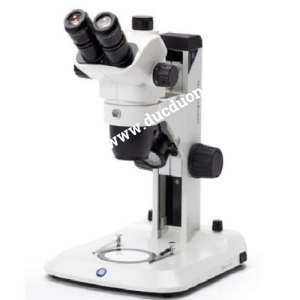
Euromex trinocular stereo microscope provides accurate image data to help meet ISO 22716 standards
5. Solutions to Eliminate the Fear of “Thermal Drift”
5.1 Preserving R&D Formula Reproducibility via Microprocessor-Controlled Sensors
R&D managers often worry that formulas successfully tested at a small scale will fail during scale-up. The primary cause is thermal drift in stability testing equipment, which compromises result repeatability.
The AS ONE and Jeiotech incubator lines distributed by Duc Duong utilize high-end dual PT100 temperature sensors. This technology limits temperature fluctuation to within ±0.1°C, ensuring 100% reproducibility of research formulas.
5.2 Commitment to Periodic Calibration and 24-Hour On-Site Technical Support
To alleviate concerns regarding equipment deviation over time, Duc Duong provides periodic temperature calibration services compliant with ISO/IEC 17025. Our team of experienced application engineers is always ready to provide on-site technical support at your facility.
We guarantee that genuine spare parts are always in stock in Ho Chi Minh City. Engineers will arrive on-site within 24 hours to resolve any issues, ensuring continuous laboratory operations.
6. ISO 22716 / cGMP Validation Documentation
6.1 Ready-to-Use IQ/OQ/PQ Validation Documentation for Cosmetic Plants
Preparing equipment validation documentation often consumes significant time for the QA department. Duc Duong provides a complete set of Installation Qualification (IQ), Operational Qualification (OQ), and Performance Qualification (PQ) documentation with the equipment. Temperature mapping (conducted at 9–12 points) demonstrates a chamber temperature uniformity of ±0.5°C. This data enables the factory to easily meet the rigorous requirements of ISO 22716 certification.
6.2 Standardization of digitized ISO 22716 quality monitoring logs
The equipment system supplied by Duc Duong supports the digitization of 24/7 temperature monitoring logs. Data is stored automatically, fully complying with data integrity criteria.
This electronic data source is readily available for presentation to international auditing bodies such as SGS or TUV. This enhances the factory’s credibility and saves time during compliance audits.
7. Expanded application for laboratory reference sample storage
7.1 Retention of reference samples using specialized ultra-low temperature freezers
In addition to microbiological culturing and stability testing, ISO 22716 requires factories to retain finished product reference samples throughout their market shelf life. To preserve the integrity of heat-sensitive biological components, specialized ultra-low temperature freezers are required.
The equipment maintains ultra-low temperatures ranging from -40°C to -86°C, completely halting biochemical degradation reactions. This solution ensures retained samples maintain their original characteristics for future reference in the event of product complaints.
7.2 Separation of extract residues using refrigerated centrifuges
During the R&D process for formulas containing natural extracts, the residue separation stage is critical for achieving serum clarity. Utilizing a high-speed refrigerated centrifuge allows for the complete removal of suspended particles without raising the sample temperature.
The cooling system maintains a temperature range of -20°C to +40°C, preventing protein coagulation caused by mechanical friction. This is a valuable piece of auxiliary equipment that helps complete the infrastructure of a cGMP-compliant cosmetic laboratory.
Conclusion
Standardizing the testing system according to ISO 22716 is a strategic move that enables cosmetic manufacturers to eliminate the risk of batch failure and safeguard their brand reputation. The combination of the Class II Biosafety Cabinet (DD-ATSH-II-1200), AS ONE Refrigerated Incubator (KMH-050), and Euromex Microscope (NZ-1903-S) creates a comprehensive quality control solution. This system completely eliminates “false positive” results, enables early detection of coalescence, and resolves concerns regarding “thermal drift” during R&D. Furthermore, the equipment package includes full IQ/OQ/PQ validation documentation, assisting businesses in rapidly finalizing their cGMP Cosmetic dossiers. Duc Duong Company is proud to be a reputable, authorized distributor of high-quality laboratory equipment.
For consultation on designing an ISO 22716-compliant cosmetic QC laboratory, please contact Duc Duong Scientific and Technical Company to receive in-depth support.
DUC DUONG SCIENTIFIC & TECHNICAL COMPANY
Address: 1014/67 Tan Ky Tan Quy, Binh Hung Hoa, Binh Tan, HCMC
Tel: (028) 3762 8042 – 3762 8043 – 3750 8514 – 3750 8793
Fax: 028 37628043
Email: ducduong@ducduongco.com
Website: ducduongco.com
Zalo OA: DUC DUONG SCI
FAQ
1. Is performing cosmetic microbiological testing inside a Class II Biosafety Cabinet mandatory under ISO 22716?
ISO 22716:2007 requires strict control over the risk of microbial cross-contamination. Operations conducted within a Class II Biosafety Cabinet—equipped with an integrated H14 HEPA filter—generate Class 100 clean air; this eliminates environmental mold spores that could cause “false positives” and ensures the safety of the testing personnel.
2. How long does the accelerated stability test using the AS ONE refrigerated incubator last?
Accelerated stability tests are typically conducted over a period of 1 to 3 months under conditions of elevated temperature (40°C – 45°C) and 75% relative humidity (RH). The results allow for the prediction of the product’s stability and shelf life (typically 2 to 3 years) under normal storage conditions.
3. How does the Euromex NZ-1903-S stereo microscope assist in detecting the risk of emulsion separation?
The Euromex NZ-1903-S microscope features an integrated trinocular camera connected to software that magnifies and clearly visualizes the size of dispersed oil/water droplets (in micrometers). Detecting the onset of droplet coalescence at the microscopic level enables R&D engineers to adjust emulsifiers before the product undergoes complete phase separation.
4. How does the AS ONE KMH-050 refrigerated incubator address “temperature drift” that could compromise R&D samples?
The AS ONE KMH-050 incubator utilizes dual PT100 temperature sensors and an advanced PID microprocessor controller. This technology maintains absolute temperature stability within the chamber, with fluctuations of only ±0.1°C, effectively eliminating the risk of temperature drift that could compromise the results of new formula research.
5. What validation documentation does Duc Duong provide for facilities undergoing ISO 22716 certification audits?
Duc Duong provides a comprehensive documentation package—including Installation Qualification (IQ), Operational Qualification (OQ), and Performance Qualification (PQ) protocols, a temperature distribution map (9–12 point temperature mapping), and equipment calibration certificates—fully prepared to support ISO 22716 and cGMP Cosmetic certification audits.