
Amidst mounting pressure regarding ESG audits and sustainable development, traditional laboratory chemical management is revealing significant limitations in terms of both cost and safety. Substantial budgets—amounting to hundreds of millions of VND—are lost as volatile organic solvents escape into the environment after each testing batch, creating a major operational expenditure (OPEX) drain for the facility.
Simultaneously, multinational corporations are increasingly tightening their supplier assessment criteria. Toxic emissions and excessive energy consumption can lead to the loss of export orders if a business fails to meet ISO 14001 standards.
Consequently, transitioning to a “Green Lab” model serves as a strategic solution to optimize the P&L statement and enhance competitiveness. This article analyzes a closed-loop technical solution distributed by Duc Duong, which enables the recovery of over 85% of solvents, cuts chemical costs by 70%, and delivers a return on investment (ROI) in under 12 months.
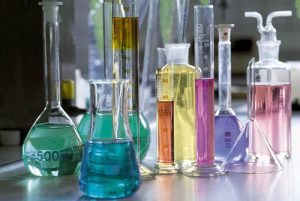
1. Hidden operational cost inefficiencies
1.1 Cost inefficiencies due to organic solvent evaporation
Traditional extraction methods using open Soxhlet systems result in the complete evaporation—100% loss—of expensive organic solvents (such as ether, chloroform, and hexane) into the atmosphere. This necessitates constant budget approvals by the purchasing department for monthly chemical replenishment.
Furthermore, the evaporated solvent is released into the laboratory’s air treatment system. This increases the operational load, forcing the HVAC system to boost filtration capacity by 50% to maintain air quality standards.
1.2 ESG Audit Hurdles and TCVN ISO 14001:2015 Standardization
ESG audits from US and EU markets impose strict limits on Volatile Organic Compound (VOC) emissions from Quality Control (QC) areas. Without a chemical recovery mechanism to eliminate emissions, facilities risk failing these assessments.
Under TCVN ISO 14001:2015 regulations (Clause 8.1 – Operational Control), enterprises are required to establish procedures for minimizing hazardous waste. Standardizing green testing infrastructure is a key solution for maintaining export certifications.
2. Closed-loop Solvent Circulation
2.1 Cutting Chemical Costs by 70% with the Sonnen G350 Fat Analyzer
The traditional Soxhlet method consumes 100–150 mL of solvent per sample position and requires 6–8 hours of heating to complete. This bottleneck is fully resolved by adopting the G350 Fat Analyzer—distributed by Duc Duong and featuring synchronized data integration with Sino-Sonnen China.
| Comparison Criteria | Classical Soxhlet Extraction Method | Sonnen G350 Automatic Fat Analyzer |
| Solvent recovery rate | Solvent recovery rate | > 85% (Closed-loop automatic condensation) |
| Batch processing time | 6 – 8 hours/batch | 45 – 60 minutes/batch |
| Chemical procurement budget | 100% new solvent purchased monthly | 70% reduction in procurement costs |
| EHS (Health & Safety) | High risk of solvent vapor exposure | 100% enclosed system; no toxic gas leakage |
A 6-step automated system (Soaking – Extraction – Washing – Recovery – Drying – Cooling) achieves a condensed solvent recovery rate of over 85%. The recovered solvent is directly reused in subsequent batches, reducing chemical procurement costs by 70%.
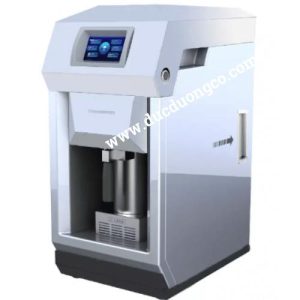
The Sonnen G350 fat analyzer helps cut chemical procurement costs by 70%
2.2 Optimizing productivity and technician health & safety
The closed-loop operating process prevents 100% of ether or petroleum ether vapors from escaping into the workspace. This eliminates the risk of toxic exposure for technicians and ensures EHS safety.
Analysis time is reduced to just 45–60 minutes per batch. This speed allows the laboratory to triple its result output, enabling the rapid release of finished product batches.
3. Neutralizing acid vapors and toxic gases
3.1 Absorbing and eliminating toxic gases with the Sonnen Smart-20 Digestion Uni
The Kjeldahl nitrogen digestion process, conducted at 450°C, releases significant quantities of concentrated H2SO4 vapor and SOx gases. This corrosive gas stream corrodes fume hood walls and damages the components of expensive measuring instruments.
Duc Duong effectively resolves this issue using the Sonnen Smart-20 Digestion Unit, featuring genuine Sonnen Smart-20 data connectivity.
A 20-position cast aluminum block ensures uniform heating, integrated with a central neutralization system. This mechanism absorbs and eliminates 100% of toxic acid vapors before exhaust is released into the environment.
3.2 Preventing corrosion and damage to cleanroom assets
Completely eliminating rising acid vapors protects fume hood walls and laboratory bench surfaces from chemical corrosion. This extends the operational lifespan of all fixed assets within the cleanroom.
Furthermore, the absence of toxic fumes in the air ensures the laboratory strictly complies with OSHA workplace safety regulations. This helps minimize insurance costs and the risk of occupational illnesses.
To receive a detailed ROI calculation for transitioning to a “Green Lab” model and to register for a practical analysis demonstration at Duc Duong, please click the Duc Duong Company Contact Form to receive immediate assistance from an application engineer.
4. Optimizing muffle furnace energy efficiency
4.1 Reducing energy loss by 40% with the Nabertherm LVT 15/11 Muffle Furnace
Older generation muffle furnaces feature single-shell designs that radiate significant heat (>60°C) into the air surrounding the working chamber. This raises the laboratory temperature, forcing the HVAC system to consume twice as much electricity for cooling.
Duc Duong offers the Nabertherm LVT 15/11 B410 (15-liter) ashing furnace—an officially imported unit fully integrated with Nabertherm Germany’s data systems.
Utilizing the Nabertherm laboratory furnace—featuring a ribbed stainless-steel double-shell design combined with German-standard insulation—reduces energy loss by 40%. The outer casing maintains a safe temperature, preventing the risk of thermal burns for technicians.
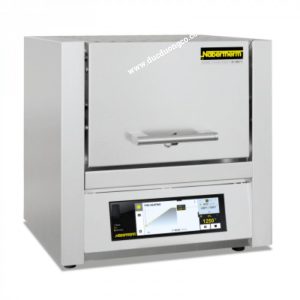
Nabertherm furnaces help significantly reduce energy loss, meeting ISO 14001 standards
4.2 Fume-free convective sintering airflow design
The Nabertherm LVT 15/11 furnace incorporates a natural convection air supply system that preheats the air before it enters the heating chamber. This design ensures complete sample ashing without releasing black smoke or acrid odors into the cleanroom.
The cleanroom air quality remains pristine—a significant advantage that helps the laboratory easily meet ISO 14001 environmental audit criteria.
5. Safe chemical storage planning
5.1 Digital temperature monitoring with Toga AS ONE smart chemical cabinets
Storing solvents and extraction chemicals requires strict temperature control to prevent spontaneous decomposition. Duc Duong is the authorized distributor of these South Korean-made smart chemical cabinets, which feature data integration with AS ONE AXEL Japan.
The Toga AS ONE cabinets are equipped with microprocessor-based sensors that provide continuous digital temperature alerts. A digital display allows analysts to monitor internal conditions, preventing chemical degradation caused by overheating.
Important EHS technical note: While Toga AS ONE cabinets offer smart storage and temperature alerts, they do not feature reinforced explosion-proof capabilities.
5.2 Dedicated fire-safe storage planning in compliance with cGMP/ISO 14001
To fully meet fire safety and ISO 14001 standards, the facility requires a dedicated storage area for flammable and explosive chemicals. This storage area features fire-resistant walls, pressure relief valves, and an automatic FM200 gas fire suppression system, complementing the Toga AS ONE cabinets.
Combining smart storage cabinets with a compliant fire-safe storage area completely eliminates fire risks. This solution safeguards the facility and ensures the EHS Manager meets their legal responsibilities.
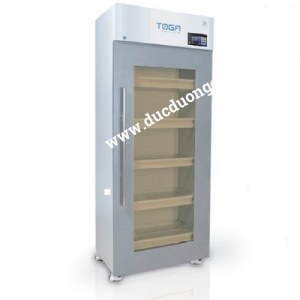
Safe and precise laboratory chemical management with TOGA chemical storage cabinets
6. ROI Analysis and ISO 14001 Audit Documentation
6.1 ROI of Under 12 Months for QC Labs
When evaluating a “Green Lab” investment project, the Return on Investment (ROI) is a primary concern for the CFO. The break-even point is calculated based on 70% savings in chemical costs plus a 40% reduction in HVAC energy consumption.
For medium-sized QC labs, the payback period for the total equipment investment supplied by Duc Duong ranges from just 9 to 12 months. Beyond this timeframe, the system generates direct cost savings for the business
6.2 Transparent Documentation Ready for ESG Audits
The equipment system supports digitization and the extraction of 24/7 solvent recovery logs. This data provides transparent, tamper-proof evidence for audits.
IQ/OQ/PQ validation documentation and energy-saving certificates are ready for presentation to international assessment bodies such as SGS or TUV. This standardization helps businesses establish their reputation as a “green” brand in the market.
Conclusion
Implementing laboratory chemical management based on the Green Lab model is a strategic solution that enables factories to eliminate OPEX waste and successfully pass rigorous ESG audits. The integrated equipment suite—comprising the Sonnen G350 Fat Analyzer, Sonnen Smart-20 Digestion Unit, Nabertherm LVT 15/11 Muffle Furnace, and AS ONE Toga Chemical Storage Cabinet—recovers over 85% of solvents, cuts new chemical procurement costs by 70%, reduces energy loss by 40%, and eliminates 100% of toxic acid vapors. The system completely eliminates fire and explosion risks, ensures fire safety compliance, and achieves an ROI break-even point of under 12 months. Duc Duong is proud to be a reputable, authorized distributor of high-quality “Green Lab” equipment.
For consultation on Green Lab planning and to receive a quote for genuine equipment packages, please contact and register with Duc Duong Scientific & Technical Company to receive dedicated service.
DUC DUONG SCIENTIFIC & TECHNICAL COMPANY
Address: 1014/67 Tan Ky Tan Quy, Binh Hung Hoa, Binh Tan, HCMC
Tel: (028) 3762 8042 – 3762 8043 – 3750 8514 – 3750 8793
Fax: 028 37628043
Email: ducduong@ducduongco.com
Website: ducduongco.com
Zalo OA: DUC DUONG SCI
FAQ
1. How does the Green Lab model reduce chemical costs by 70% through its technical mechanism?
The Green Lab model utilizes the Sonnen G350 Fat Analyzer, which automates a closed-loop, six-step process and recovers over 85% of organic solvents (Ether, Petroleum ether) via condensation. This solvent recovery allows facilities to directly cut their monthly chemical procurement budget by 70%.
2. How does the Sonnen Smart-20 digestion unit handle the release of H2SO4 acid fumes?
The Smart-20 features a uniform copper-aluminum alloy heating block capable of reaching 450°C, integrated with a central fume extraction and neutralization system. All concentrated H2SO4 fumes generated during digestion are absorbed by an alkaline medium and completely neutralized (100% filtration), preventing equipment corrosion and protecting EHS personnel health.
3. How does the Nabertherm LVT 15/11 muffle furnace reduce heat loss and energy consumption by 40%?
The Nabertherm (Germany) LVT 15/11 furnace employs a ribbed stainless-steel double-shell structure combined with high-grade insulation panels. This design prevents 40% of heat from radiating into the cleanroom, maintains a safe external casing temperature, and reduces the cooling load on the HVAC system.
4. Does the Toga AS ONE smart chemical storage cabinet meet fire and explosion safety standards?
The Toga AS ONE cabinet is designed for laboratory solvent storage and features smart digital temperature monitoring sensors, but it does not possess reinforced explosion-proof capabilities. To comply with fire safety regulations and ISO 14001 standards, enterprises should implement a dedicated chemical storage area equipped with an automatic gas-based fire suppression system.
5. What is the payback period (ROI) for transitioning to the Green Lab model?
By saving 70% on the cost of purchasing new chemicals, reducing furnace electricity consumption by 40%, and cutting manual labor by 80%, medium-sized QC labs can fully recoup their investment in Green Lab equipment in just 9 to 12 months.