
In the quality control of sterile pharmaceuticals, the presence of contaminants invisible to the naked eye is a primary risk to patient safety. A particle count exceeding the permissible limit in distribution channels can prompt the Drug Administration to immediately recall the entire batch. This incident can cause tens of billions of dong in financial losses and directly threaten the GMP operating license of the factory.
The bottleneck often stems from errors caused by air bubbles suspended during the sample aspiration process. Additionally, the risk of data tampering in handwritten test reports can easily lead to businesses failing GMP-EU audits.
Therefore, standardization of regulationsTesting procedures for injectable and intravenous drugs bassassinate USP Pharmacopoeia <788>This is a mandatory requirement from the Board of Directors. This article analyzes the automated particle counting solution conforming to the 21 CFR Part 11 standard, distributed by Duc Duong.
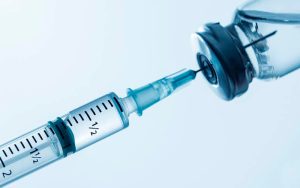
1. Risk of recall of injectable drug batch due to particulate matter.
1.1 Clinical risks and recall regulations from the Drug Administration
Invisible particulate matter (>= 10 µm and >= 25 µm) entering the bloodstream via intravenous infusion can cause pulmonary microvascular occlusion and tissue necrosis. Given this serious clinical risk, the Drug Administration of Vietnam… Ministry of HealthThe strictest penalties will be applied to shipments that violate regulations.
When a sample is found to be substandard in terms of particle purity, the regulatory agency will issue a nationwide recall order. This incident causes significant P&L losses for the company and deprives it of the right to participate in drug tenders for the hospital system.
(Read more: Managing laboratory chemicals using the Green Lab model reduces new purchase costs by 70%.)
1.2 Particle size distribution control thresholds according to the USP, Ph. Eur., JP Pharmacopoeia
Light-blocking methodLight Obscuration) is prescribed by international pharmacopoeias as a method of arbitration.to count particles in solutionSmooth. Standard USP Pharmacopoeia 788and Ph. Eur. 2.9.19 imposes extremely strict thresholds for particulate impurities.
| Sterile Injectable Form | Particle Limit ≥10μm | Particle size limit ≥ 25μm |
| Large volume infusions (LVP > 100 mL) | <= 25 particles / mL | <= 3 particles / mL |
| Small volume injectable drugs (SVP <= 100 mL) | <= 6000 seeds / pod | <= 600 seeds / pod |
2. Standard optical particle count according to the Pharmacopoeia
2.1 Light-shading technology with Klotz Syringe particle counter
Cleanliness control requires a system.particle counter mustOperates with high repeatability. Duc Duong distributes genuine Syringe systems from Markus Klotz GmbH Germany OfficialLDS 30/30 optical sensor application.
The laser light-shielding mechanism accurately measures particle sizes from 1.5 – 50 µm. A volumetric piston pump controls the smooth reciprocating suction rate (100 µL – 25 mL), completely eliminating particles.The entire flow disruption occurs when counting particulate matter in the solution.
(Read more: An efficient wireless temperature data logging solution for laboratories.)
2.2 Ensure Data Integrity according to FDA 21 CFR Part 11 standards
The SW-CA 3.0.0 control software included with the device is 100% compliant with regulations. FDA standard 21 CFR Part 11Regarding data integrity, the automated Audit Trail logging system uses encryption keys to absolutely prevent any manipulation of results.
The multi-level user access control feature combined with digitized electronic signatures ensures absolute transparency in testing records. As a result, the Pharmaceutical QC department is fully confident in passing GMP-EU accreditation assessments.
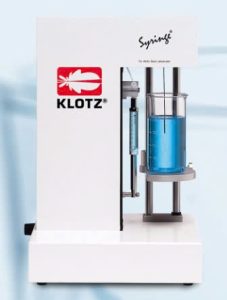
Particle counters help ensure accurate results in testing injectable and intravenous medications
3. Clean air isolation, Class A sterile laboratory.
3.1 Establishing a Class A unidirectional airflow zone with the DD-ATSH-II-1200 Cabinet
Unstandardized laboratory air containing fine suspended dust particles falling onto the sample dish can produce “false positive” results. To eliminate the risk of cross-contamination, Duc Duong has researched and developed a solution. Class II biological safety cabinet DD-ATSH-II-1200.
Unidirectional airflow passes through the ULPA filter in the vial.It removes 99.995% of dust particles smaller than 0.3 µm. The device maintains a sterile environment.p A (ISO Class 5) according to TCVN 8664-1:2011 (ISO 14644-1:1999), provides absolute protection for the test specimen.
(Read more: Create a clean work area when handling QC laboratory standards.)
3.2 Dual protection mechanism for testers and test samples
The negative pressure differential structure creates a protective air curtain that prevents toxins from injectable antibiotics or cytotoxic drugs from leaking out. This feature meets the daily biosafety level II criteria.
This design protects both the sample from environmental microparticles and the health of the QC inspector. This combination ensures compliance with standard operating procedures (SOPs).
Does your company need advice on planning a sterile particle counting system that meets USP <788> standards and receive a complete set of IQ/OQ/PQ validation documents free of charge? Click here. Contact Form for Duc Duong CompanyLet our application engineering team provide support right away.
4. Standardization of ultrapure sample washing water
4.1 Eliminating blank background noise using the EVO UP DIO BA System
If the distilled water used to wash the sample is not pure enough and contains microions, the initial environmental test will fail (Environment Test <= 25 particles >= 10 µm in 25 mL). This issue will cause the machine to refuse to perform the sample counting cycle.
Duc Duong provides EVO UP DIO BA ultra-pure water filtration systemofficial distribution from Mirae ST Korea Official.
Purified water reaches electrolysisResistivity of 18.2 MOΩ.cm at 25°C and TOC < 5 ppb. Water quality standard Class 1 according to TCVN 4851:1989 (ISO 3696:1987) ensures complete elimination of contaminants.n background noise when running test samples.
4.2 Optimizing the automatic sensor flushing cycle
Ultrapure water source supports the automatic flushing process.RinseThe Klotz Syringe device completely removes any microparticles adhering to the tubing. This mechanism prepares the sensor surface to be completely clean before the next injection.
The stability of the baseline water source ensures precision and reproducibility between test batches. As a result, the analytical results obtained are highly reliable.
5. Solutions to dispel the fear of “sensor clogging bubbles”
5.1 Air bubble removal and backflow cleaning protect the sensor.
A constant concern for QC officers is the miscounting of air bubbles as solid particles, leading to falsely inflated results. Klotz piston pumps control the extremely fine reciprocating flow and incorporate an automatic foam discharge feature to eliminate suspended air bubbles.
For high-viscosity injectable solutions that pose a risk of clogging optical cells (Sensor, Clog), backwash mode is recommended.Backflow) emits a reverse-direction scouring force. This feature protects the laser sensor and extends the hardware’s lifespan.
5.2 Commitment to readily available spare parts and 24-hour on-site technical support.
To eliminate concerns about production line delays due to sensor failures, Duc Duong maintains a readily available spare parts inventory in Ho Chi Minh City. We always have genuine LDS laser sensors and Klotz syringe pistons in stock.
TeamOur application engineers, knowledgeable in Pharmacopoeia standards, are committed to providing on-site technical support within 24 hours. This commitment ensures the sterile testing station operates continuously.
6. The ROI problem and the ISO/IEC 17025 documentation
6.1 The ROI problem for protecting the product portfolio
When defending the investment plan for testing equipment before the Board of Directors, the return on investment (ROI) is the strongest financial argument. The investment cost of the system is much smaller than the P&L loss.A batch of injectable drugs has been recalled (goods…)(billion VND).
The project delivers an immediate ROI break-even point by guaranteeing a 100% shipment approval rate. Simultaneously, the system helps businesses establish a reputation for quality when bidding on injectable drug lists for major hospitals.
6.2 Standardize the entire GMP-EU and ISO/IEC 17025 assessment dossier.
Duc Duong provides a complete set of Installation Validation (IQ), Operational Validation (OQ), and Performance Validation (PQ) documentation, along with NIST standard particle calibration certificates. The analytical methods are pre-programmed according to standards. USP 1788.
Transparent GLP coding evidence is readily available for extraction by GMP-EU and ISO/IEC 17025 inspection teams. The records are complete.This confirms our capacity to test injectable drugs and intravenous fluids to meet international standards.
Conclude
In short, standardizing the processTesting of injectable and intravenous drugsAn automated particle counting system is a strategic solution that helps pharmaceutical factories eliminate the risk of batch recalls and protect production. The synchronized equipment chain includes a Klotz Syringe particle counter (Germany), a DD-ATSH-II-1200 biosafety cabinet, and an EVO UP DIO BA water filtration system, maintaining a clean Class A 99.995% one-way airflow, purifying water to Class 1 18.2 MOmega.cm³, and automatically counting particles according to USP <788> standards. The system completely eliminates the fear of air bubbles or sensor clogging, meeting 100% of FDA 21 CFR Part 11 data safety regulations and completing the full ISO/IEC 17025 validation documentation. Duc Duong is proud to be a reputable partner distributing leading lines of sterile pharmaceutical testing equipment through official channels.
Customers who require consultation on the layout of a sterile particle counting lab and wish to receive a quote for genuine equipment sets, please contact and register at DUC DUONG SCIENCE AND TECHNOLOGY COMPANYTo receive attentive service.
FAQ
1. What is the USP <788> limit for particles invisible to the naked eye for injectable infusions?
According to USP <788> (light-shielding method), for large volume infusion solutions (LVP), the particle count should not exceed 25 particles/mL (>= 10 µm) and 3 particles/mL (>= 25 µm). For small volume injectable solutions (SVP), the corresponding limits are <= 6000 particles/container (>= 10 µm) and <= 6000 particles/container (>= 25 µm).
2. How does the SW-CA 3.0.0 software on the Klotz Syringe machine meet FDA 21 CFR Part 11 standards?
SW-CA 3.0.0 fully integrates an unmodifiable/deleteable Audit Trail tracking system, multi-level user permission management, mandatory electronic signature verification when reviewing results, and automatic SQL Server database encryption, ensuring absolute data integrity for GMP-EU audits.
3. How can we eliminate the phenomenon of air bubbles being mistaken for particles in injectable medications?
The Klotz Syringe particle counter is equipped with a high-volume piston-driven pump with a flexibly adjustable suction speed. The device incorporates an automatic foam discharge process and backwashing feature.BackflowThis helps to completely release any suspended air bubbles before passing through the photometric cell.
4. How does the DD-ATSH-II-1200 biological safety cabinet support the sterile particle testing process?
The DD-ATSH-II-1200 cabinet is equipped with a ULPA filter that removes 99.995% of particulate matter >= 0.3 µm, maintaining a standard Class A (ISO Class 5) one-way airflow environment. This ultra-clean air zone completely prevents environmental dust particles from entering the test sample, eliminating the risk of “false positives”.
5. What accreditation documents does Duc Duong Company provide for its particle counter that meets ISO/IEC 17025 standards?
Duc Duong provides a complete package of documentation including Installation Validation (IQ), Operational Validation (OQ), Performance Validation (PQ), laser sensor calibration certificates with NIST standard particles meeting Pharmacopoeia standards, and on-site technical support at the factory within 24 hours.