
How is the ISO 17025 Autoclave Validation Performed?
Is a new autoclave in the lab with a temperature calibration certificate enough to pass a rigorous audit? The answer from the validation experts is often "Not enough."
In reality, the confusion between routine calibration and validation leads many organizations to encounter "non-conformance" (NC) errors. You may possess state-of-the-art equipment, but lack a proper IQ/OQ/PQ process to demonstrate its capabilities.
This article will guide you through the detailed process of validating your autoclave according to ISO 17025. We will address the challenge of equipment capability documentation to ensure sterilization results consistently meet international standards.
1. Understanding Autoclave Validation According to TCVN ISO 17025
1.1 The Role of Sections 6.4 and 7.2 in ISO 17025
In the TCVN ISO/IEC 17025:2017 standard, clause 6.4 (Equipment) requires laboratories to verify that equipment meets the specified requirements before use. This ensures that your autoclave not only operates but also performs its intended function.
Furthermore, section 7.2 emphasizes validating the method. You need to demonstrate that the established autoclave temperature cycle actually kills the target microorganisms. Correctly implementing these steps makes your quality management system more transparent and reliable for audit teams.
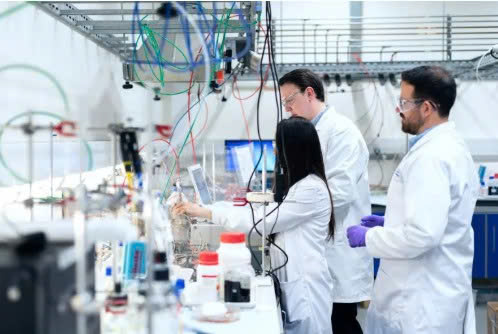
Adhering to ISO standards helps equipment operate efficiently and ensures safety for subsequent processes
1.2 Distinguishing Between Autoclave Calibration and Validation
Many lab managers still believe that temperature calibration alone is sufficient for the control process. However, calibration focuses only on determining the sensor's error at a specific point in time. Validation, on the other hand, is a process of demonstrating that the equipment will produce consistent results under various real-world load conditions.
| Criteria | Calibration | Validation |
| Objective | Determine measurement error | Demonstrate sterilization effectiveness |
| Measuring equipment | Temperature/pressure measurement standard | Multi-channel sensor + Biological indicator. |
| Results | Calibration certificate | Complete IQ/OQ/PQ documentation |
2. IQ Installation Assessment for Autoclaves
2.1 Checking Documentation and Hardware Components
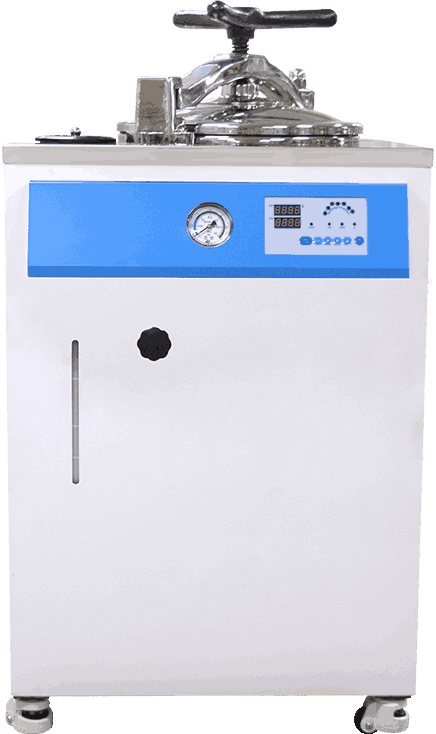
The first step of IQ is to verify the legality and integrity of the hardware components. We need to compare the required documentation list, including Certificates of Origin (CO), Certificates of Quality (CQ), and user manuals from the manufacturer. For example, when receiving the 103-liter Self-Filling Autoclave, SJ-FW100, from Korea, you must carefully check the tightness of the silicone door gasket.
The control system and components such as the heating element (heater) must match the published power rating of 3kW. Compatibility between the equipment and documentation is a crucial foundation for beginning the more in-depth assessment steps later.
2.2 Infrastructure and Location Requirements
The installation location directly affects the lifespan and accuracy of the autoclave. You need to prepare a water supply that meets RO standards or distilled water to avoid scale buildup in the sterilization chamber. Additionally, the drainage system must be heat-resistant to handle wastewater after the sterilization cycle.
Adhering to the technical instructions from SJ Clave Korea ensures the most stable operation of the equipment. Remember to leave ample space around the machine to ensure proper heat dissipation throughout the operation.
3. OQ Procedure: Verification of No-Load Operation
3.1 Checking the Automatic Cycle and PID Controller
The OQ phase focuses on verifying that the machine operates correctly according to the design without the need for sample loading (no load). The principle of modern autoclaves is based on a fully automatic cycle: automatic water filling, heating, sterilization, and draining. You need to closely monitor the PID controller to ensure these phases run smoothly in the correct sequence.
For optimal results, you should refer to the instructions on how to accurately control pressure in the autoclave on the SJ-FW series. Good control of the temperature-pressure relationship helps to optimally protect specimens and equipment.
3.2 Testing Fault and Safety Scenarios
Safety is vital in the operation of high-pressure autoclaves. We need to simulate fault scenarios to test the equipment's warning system. One of the most common risks is how to safely avoid running out of water during autoclave operation using the integrated water level sensor.
If the water level is low, the machine must automatically shut off the heating and immediately send a warning signal. This not only protects the heating element but also prevents potential fire and explosion hazards in the laboratory.

Autoclaves must meet IQOQPQ standards before being put into use
4. Performance Evaluation (PQ) with Real Load
4.1 Identifying the Cold Spot and Sensor Placement
PQ is the most important step as it reflects the sterilization capability when samples are inside the autoclave. We need to use 12 to 16 independent temperature sensors evenly distributed within the 103-liter autoclave. The main goal is to identify the "cold spot"—the point where the temperature reaches the required level most slowly.
Typically, the cold spot is located in the middle of the instrument baskets or near the discharge outlet. Finding this location helps us set a sufficiently long sterilization time to ensure all areas reach the safe threshold.
4.2 Microbiological Testing with Biological Indicators
In parallel with temperature measurement, we use biological indicator tubes containing Geobacillus stearothermophilus spores. This is the most heat-resistant type of bacteria, used to verify the effectiveness of the autoclave.
The culture results after autoclaving will demonstrate the actual effectiveness in killing microorganisms. This data, combined with the cumulative heat value F0, will create irrefutable scientific evidence for your validation profile.
.jpg)
Using bioindicators makes your autoclave more reliable
5. Measurement Equipment and Validation Units
5.1 Dedicated Data Logger System
To collect accurate data for the ISO 17025 autoclave validation problem, you need a standard Data Logger system. These devices must be heat-resistant, pressure-resistant, and capable of continuously recording data every second.
If you are still unsure about the standards for supporting equipment, learn more about IQ, OQ, and PQ validation for laboratory autoclaves. Understanding the tools will help you be more proactive in periodic quality monitoring.
5.2 Choosing a Reputable Validation Service Provider
In Vietnam, you can hire independent units such as Quatest 3 or calibration centers accredited by BOA. The primary criterion is that the unit must have ISO 17025 certification for the relevant thermal measurement field.
Although outsourcing may be more expensive, it provides absolute objectivity to the lab's records. This is a worthwhile investment to ensure the credibility and quality of all future test results.
6. Establishing Reporting Records and Maintaining Validation Status
6.1 Building a Standard Validation Report
A standard validation report must include complete data from the three stages: IQ, OQ, and PQ. The report should clearly present temperature and pressure graphs and microbiological test results. Any Pass or Fail conclusions must be based on the acceptance criteria established from the beginning.
This record will be compelling evidence for ISO assessors regarding the laboratory's capabilities. Storing records in a systematic way also makes information retrieval easier when needed.
6.2 Frequency of Revalidation and Non-Conformance Handling
or after major component repairs. If the validation result is a Non-Conformance (NC), you need to perform the non-conformance handling procedure according to section 7.10 of ISO 17025.
Reviewing the cause helps us improve the operation and maintenance of the equipment. Maintaining continuous validation is the best way to prevent serious system failures.
Conclusion
Validation is not simply a paperwork procedure to cope with ISO 17025 audits. It is a commitment to safety and accuracy in all research and production activities in the laboratory.
Combining a quality device like the SJ-FW100 series with a systematic IQ/OQ/PQ validation process is key to mastering sterilization technology. Hopefully, this article has helped you understand the implementation roadmap to improve your unit's capabilities.
DUC DUONG SCIENCE AND TECHNOLOGY COMPANY
Address: 1014/67 Tan Ky Tan Quy, Binh Hung Hoa, Binh Tan, HCM
Tel: (028) 3762 8042 - 3762 8043
Email: ducduong@ducduongco.com
Website: ducduongco.com
ZALO OA: DUC DUONG SCI
FAQ (Frequently Asked Questions)
Are Validation and Calibration interchangeable?
Comments
Relative post
- 17 Things to Note When Using Micropipet
- Why Do Forced Convection Cabinets Need LC DataKeeper Software?
- The 18th International Medical and Pharmaceutical Exhibition
- Outstanding Features of Nabertherm Furnaces
- Autoclaves - Decoding 7 Common Issues You Might Encounter
- What are the requirements for a climate chamber with ICH Q1A R2?
- 3 Phút Khám Phá Ưu Và Nhược Điểm Giữa Phương Pháp Tiệt Trùng Khô Và Tiệt Trùng Hơi Nước