
How to Accurately Control Pressure in an Autoclave
A deviation of just 0.1 bar in steam pressure can cause the sterilization process to fail completely. This creates a serious risk of cross-contamination in laboratories and medical facilities. Technicians often focus only on temperature, but in reality, pressure is the crucial factor for steam to reach saturation.
When pressure is unstable, the equipment not only loses efficiency but also poses a dangerous risk of fire and explosion. This article will guide us through the technique of accurately controlling pressure according to ISO standards. We will go from operating principles to practical solutions to optimize the sterilization process.
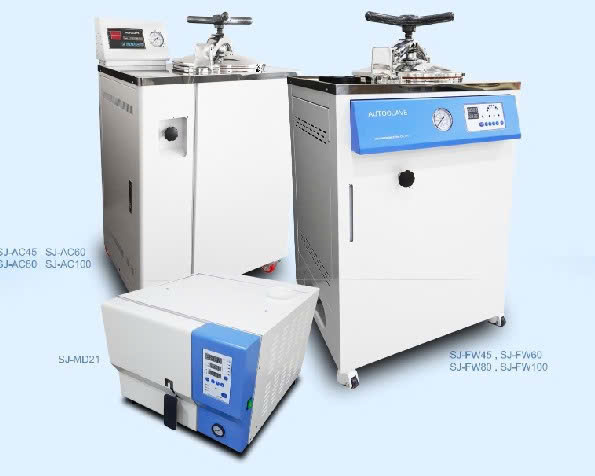
1. The Correlation Between Temperature and Steam Pressure
1.1 Principle of Saturated Steam Pressure
Pressure plays a core role in raising the boiling point of water to create saturated steam. Steam in this state possesses enormous thermal energy, allowing it to penetrate and completely destroy even the most stubborn bacterial spores. Understanding the principle of the autoclave will help you operate the equipment more safely and efficiently.
Below is a table showing the correlation between temperature and standard saturated pressure (at sea level):
| Sterilization temperature | Corresponding pressure (psi) | Corresponding pressure (bar) |
| 115°C | 10 psi | 0.69 bar |
| 121°C | 15 psi | 1.03 bar |
| 132°C | 27 psi | 1.86 bar |
1.2 Airbag Phenomenon and Parameter Deviations
Airbag phenomena occur when air is not completely expelled from the sterilization chamber before pressurization. At this time, the pressure gauge may display the target number, but the actual temperature is lower than the required saturation level. This deviation prevents the specimen from being completely sterilized even though the machine indicates the cycle is complete.
Removing airbag is mandatory to ensure temperature uniformity within the chamber. This is especially important for medical instrument sterilizers requiring absolute precision. Therefore, technicians need to closely monitor the initial air purging phase.
2. Standard Pressure Control Component System
2.1 Role of Safety Valves and Pressure Relays
Understanding the structure of the autoclave sterilizer helps us control the critical protective components. The safety valve acts as the final "stopper," automatically releasing steam when the pressure exceeds the permissible limit (usually 2.5 kg/cm²). This is an indispensable component to prevent pressure vessel explosions.
In addition, the pressure relay is responsible for cutting off the power supply to the heating element when the pressure reaches the set level. The smooth coordination between the valve and the relay helps maintain stable pressure throughout the process. A standardized component system will help the industrial autoclave operate more reliably and safely.
-in-the-autoclave-plays-a-very-important-role.jpg)
The pressure relief valve (number 7) in the autoclave plays a very important role
2.2 PID Controller and Sensor Accuracy
The PID (Proportional Integral Derivative) controller is currently the optimal technology for minimizing pressure fluctuations. Modern machines such as the 103-liter Self-Filling Autoclave, SJ-FW100, from South Korea, integrate intelligent microprocessors to maintain minimal error. This eliminates pressure overshoot that can damage sensitive specimens.
In addition, the quality of sensors from reputable manufacturers such as SJ Clave, South Korea, ensures data continuity. The fast response of the sensors allows the system to adjust the heat energy in a timely manner. Investing in advanced control technology is the best way to improve the efficiency of laboratory autoclaves.
3. Precise Pressure Control Operating Procedure
3.1 Air Removal Technique
Air removal is a crucial step to ensure that steam can directly contact all instrument surfaces. We should open the vent valve when the water starts boiling and only close it when steam is released strongly and continuously. For this system to operate smoothly, you need to consider 8 questions to answer before installing the steam sterilizer to optimize the vent location.
A proper venting procedure helps the pressure increase evenly and stably. In dental instrument sterilizers, incomplete venting can cause water to accumulate and lead to equipment rust. Ensure the vent valve and piping are not clogged with dirt or calcium deposits.
3.2 Monitoring and Adjusting the Cycle
Pressure gauge readings should be performed in parallel with the digital temperature display. For automatic models like the SJ-FW100, the machine will automatically perform the entire process from water filling to pressure release. This feature eliminates the risk of running out of water midway, which is a leading cause of heating element burnout and sudden pressure drops.
When using a sterilization autoclave, it's important to keep an operating log to monitor the pressure curve over time. If the time to reach the target pressure is longer than normal, the heating system should be checked immediately. Good control from the start will help extend the lifespan of the sterilization autoclave.
The heating gauge needs to be monitored regularly to ensure stable pressure inside the autoclave
4. Testing and Calibration According to ISO/TCVN Standards
4.1 Compliance with TCVN ISO/IEC 17025:2017
Modern laboratories are required to comply with the TCVN ISO/IEC 17025:2017 standard to ensure measurement competence. This includes the periodic calibration of pressure sensors using standard equipment with national metrology links. Calibration helps determine the sensor drift after a long period of continuous use.
According to this standard, all pressure control results must be stored and traceable. When you use a dental instrument autoclave in a medical environment, compliance with these regulations helps protect you against post-audits. Ensuring the accuracy of the equipment also ensures patient safety.
4.2 Technical Safety Inspection of Pressure Equipment
In Vietnam, autoclaves are equipment requiring strict occupational safety standards and must be inspected periodically by the competent authorities. The inspection checklist usually includes:
Hydraulic pressure testing to check the durability of the autoclave chamber.
Checking the sensitivity and discharge threshold of the safety valve.
Determining the tightness of the piping system and door gaskets.
Using medical autoclaves without prior inspection poses significant legal and safety risks. Regular maintenance is not only about complying with the law but also helps optimize operating costs for the unit.
5. Troubleshooting Common Pressure Problems
5.1 Pressure does not rise or rises too slowly
This is the most common problem when operating an autoclave. Common causes include a leaking silicone door gasket or a stuck discharge valve. For the SJ-FW100 series, the door gasket is made of a special heat-resistant material to minimize steam leakage.
In addition, a lack of water (running out of water) can also prevent the machine from generating enough steam to increase pressure. We need to check the water level in the reservoir and ensure that the heating element is not excessively covered with limescale. Regular cleaning is the simplest way to fix unexplained pressure drops.
5.2 Uncontrolled Pressure Surge
This is extremely dangerous and is usually due to a faulty relay or controller failing to cut off the power when the threshold is reached. If the pressure gauge needle goes beyond the green zone (safety level), we need to immediately cut off the main power supply. Absolutely do not stand near the autoclave door when there is overpressure.
Activate the safety valve manually to release pressure if the valve does not automatically open. After the incident, the equipment needs to be thoroughly inspected by a professional engineer before reuse. Equipping your laboratory with autoclaves from reputable brands will minimize these serious system failures.
Conclusion
Accurate pressure control is a prerequisite for achieving optimal sterilization efficiency and ensuring workplace safety. Understanding the temperature-pressure relationship, maintaining safety valve systems, and adhering to ISO standards will help your laboratory operate smoothly. Don't let small deviations lead to major failures in quality management processes.
Investing in automatic autoclaves like the SJ-FW100 from Korea is an economical and safe long-term solution. With PID control technology and automatic water refilling, all pressure-related risks are significantly eliminated. Contact us for advice on the most suitable sterilization solution for your facility.
DUC DUONG SCIENCE AND TECHNOLOGY COMPANY
Address: 1014/67 Tan Ky Tan Quy, Binh Hung Hoa, Binh Tan, HCM
Tel: (028) 3762 8042 - 3762 8043 - 3750 8514 - 3750 8793
Email: ducduong@ducduongco.com
Website: ducduongco.com
ZALO OA: DUC DUONG SCI
FAQ
Why has the temperature reached 121°C but the pressure is still not 15 psi?
This phenomenon is usually due to excess air pockets that have not been released. Mixed steam with air has the correct pressure but its heat transfer capacity is lower than pure saturated steam.
How often should the safety valve of the autoclave be checked?
According to safety standards, you should check the valve's functionality weekly by gently pulling the release lever. A thorough inspection should be performed annually by an authorized agency.
Can tap water be used in an autoclave?
No. Tap water contains many minerals that cause scale buildup on the heating element and blockage of the pressure valve. Distilled or deionized water should be used to protect the machine.
What pressure level is the dangerous threshold requiring emergency release?
Most laboratory autoclaves have a safe threshold of 2.2 - 2.5 kg/cm². If the pressure gauge reaches the red mark, disconnect the power and release the pressure urgently to ensure safety.
Does the SJ-FW100 autoclave have water level protection?
Yes. The SJ-FW100 incorporates a water level sensor and an automatic water refill feature, which automatically stops the cycle and warns if the water supply is insufficient, preventing overheating and fire hazards.
Comments
Relative post
- Basic Understanding of Microscopes
- Optimal Water Quality Testing Equipment for the Aquaculture Industry
- Designing a Laboratory - Basic Requirements
- 3 Phút Khám Phá Ưu Và Nhược Điểm Giữa Phương Pháp Tiệt Trùng Khô Và Tiệt Trùng Hơi Nước
- Biological Safety Cabinets in Laboratory - Applications, Benefits