
Instructions on Temperature Mapping for Autoclave Sterilizers
Did you know that even a small temperature fluctuation exceeding 0.5°C in the autoclave can ruin an entire batch of samples? This technical issue directly leads to failure in lab quality assurance assessments. In fact, many QA/QC engineers are still struggling with building equipment validation documentation.
We need a deep understanding of the temperature mapping process for autoclaves to ensure measurement accuracy. This completely eliminates risks arising during rigorous quality assessments. This practical guide will show you the most accurate and uniform temperature distribution measurement solution.
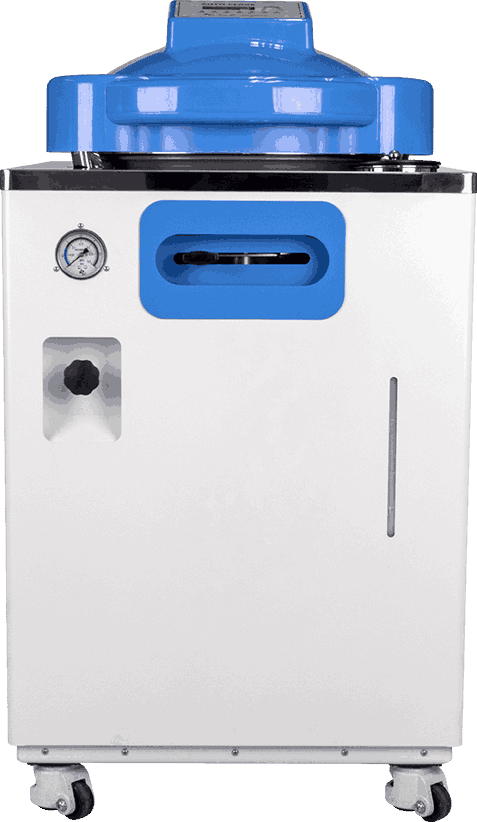
1. Legal Requirements Regarding Temperature Distribution
1.1. Distinguishing Between Calibration and Temperature Mapping
Many technicians often confuse these two core measurement concepts in the laboratory. Specifically, conventional temperature calibration focuses only on checking for errors at a fixed sensor point. This method is completely incapable of representing the entire three-dimensional space of the equipment.
Conversely, the temperature mapping process helps us assess the uniformity of heat at all coordinates. This demonstrates good and unobstructed convective airflow. Therefore, simply calibrating the original probe of the machine is not sufficient to confirm its operational capability.
1.2. ISO 17025 Standard and GMP Auditing
The issue of equipment resource control is strictly regulated in legal documents. According to Section 6.4 (Equipment) of the national standard TCVN ISO/IEC 17025:2017, the testing laboratory must perform a machine capability verification test before use.
Furthermore, pharmaceutical plants are required to have this raw data to pass the GMP audit. You should refer to the article on ISO 17025 regarding what calibrations are needed for autoclaves to synchronize the documentation. This thorough preparation helps us preserve the legal validity of all analytical results:
Maintaining continuous measurement consistency for 12 months.
Providing solid scientific evidence to the VILAS assessment team.
Preventing interference or modification of original environmental data.
2. Sensor placement procedure in the autoclave chamber
2.1. Determining the critical cold spot location
In thermodynamic engineering, finding the highest risk region is the ultimate goal. The term "Cold Spot" refers to the area where heating is slowest. In this area, saturated steam is often difficult to access or is easily trapped by localized pockets of cold air.
Typically, this weak point is located at the bottom of the sample chamber, near the valve stem or the geometric center of the loading basket. If microorganisms located here are not completely eliminated, the risk of cross-contamination is very high. Therefore, it is necessary to place independent measuring devices directly at these sensitive points.
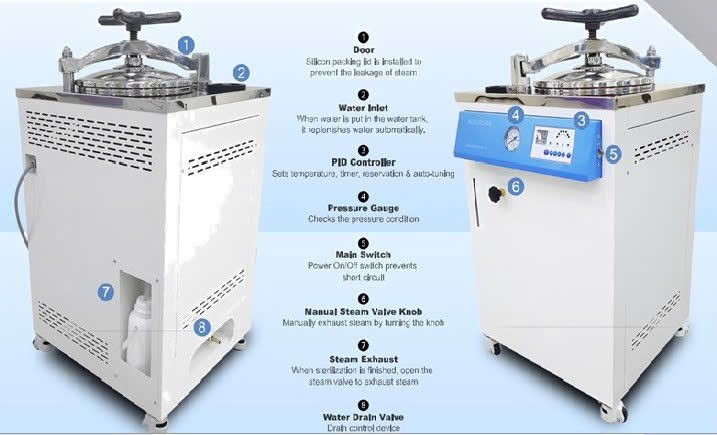
The bottom of the sample chamber is the preferred location for Temperature Mapping in the autoclave
2.2. Data Log Distribution Diagram for the 106-Liter Autoclave
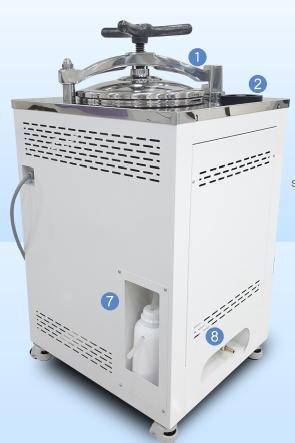
For practical measurement implementation, the geometric structure of the autoclave chamber will determine the number of sensors. International guidelines stipulate that you must use a minimum of 5 to 9 independent measurement points. Let's apply this model directly to the SJ-AD100 106-liter electric autoclave from SJ Clave.
Technicians need to distribute the automatic data logger according to a scientifically designed geometric distribution diagram. You should refer to the standardized structure on the SJ Clave AD Series product page for positioning. The temperature measurement device placement procedure includes:
Place 1 sensor in the top sample basket (near the lid).
Place 2 symmetrical sensors in the middle basket to check the convection steam flow.
Place 1 sensor at the cold point at the bottom of the autoclave near the condensate drain pipe.
Install a sensor next to the original control probe of the vertical steamer.
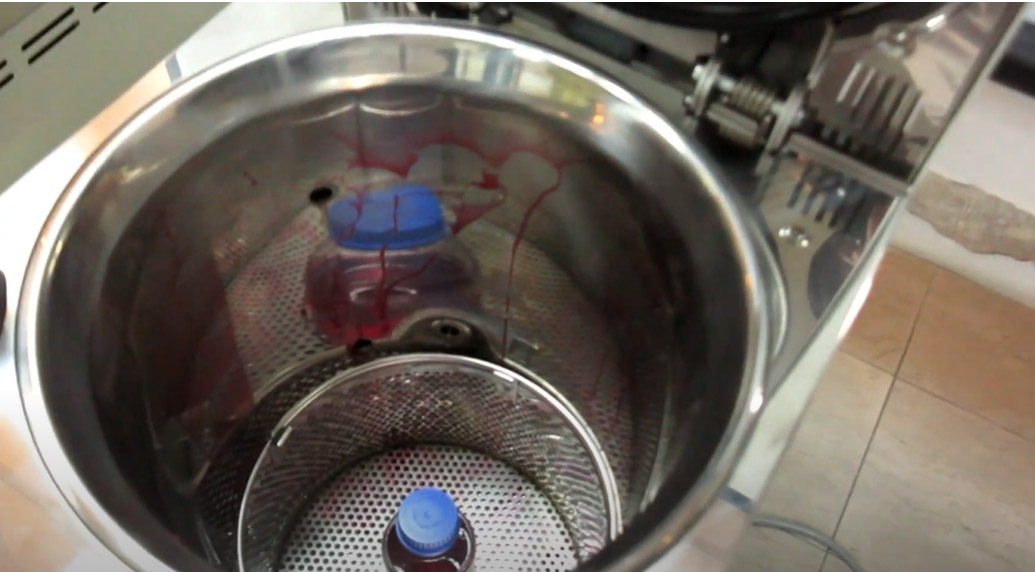
Measuring devices must be placed in multiple locations within the autoclave to ensure accurate temperature mapping
3. Installing the SPD Control Software
3.1. Synchronizing Hardware and Software Connections
The software preparation process is a mandatory first step for accurate raw data collection. First, we need to plug the DiskInterface HS data reader into the computer via the USB port. The Windows operating system will automatically recognize and configure the hardware connection.
Then, start the SPD software to begin managing the thermal loggers. Lab staff can easily download the latest version from the official Tecnosoft SPD software management page. The intuitive interface will help us check the battery and memory status of each logger.
3.2. Configuring Acquisition Step Parameters
After successful synchronization, the machine run scenario configuration needs to be done carefully. Click the "Configuration" button to set the operating parameters. According to Technosoft's data logger user manual, the two core parameters that need to be set include:
Acquisition Step: This is the time interval between two consecutive temperature data entries. We should set the time range from 10 to 30 seconds to prevent the graph from becoming blurry.
Start Date Time: Set the automatic activation date and time to match the actual operating schedule. Check the Multiple Start box if you want to synchronize the scenario for multiple measuring devices simultaneously.
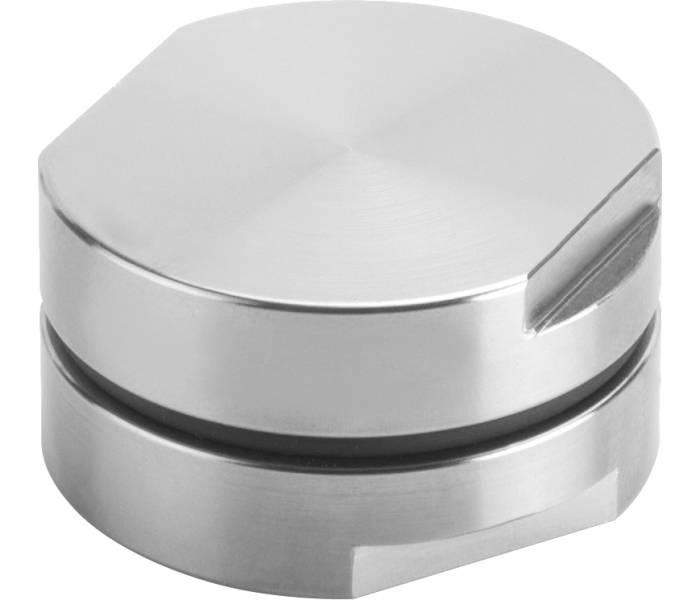
Technosoft's SterilDisk TS01SD temperature measuring device is excellent for temperature mapping
4. Data Extraction and Verification of Assessment Documents
4.1. Analyzing the Chart using the Marker Tool
When the sterilization cycle ends, safely remove the logger from the autoclave. Place the measuring device on the reading base to transfer data to the computer. The technician clicks the "Click Data" button for the software to automatically plot the real-time raw temperature chart.
For accurate calculations, we use the Marker tool with the plus icon on the menu bar. This feature helps to separate the stable saturation sterilization phase from the initial heating process. Isolating this data is mandatory in the ISO 17025 sterilization logbook management process. Areas outside the selected Marker will automatically turn gray for easier observation.
4.2. Exporting Standard Temperature Grid Excel Data
The next step is to convert the raw data into a complete technical acceptance document. The software supports exporting reports to .SLK or Excel spreadsheet format, which is very convenient. We need to extract the temperature grid to track the error details.
The quality standard specifies an extremely strict acceptable error range during the heat retention phase. Specifically, the sterilization temperature must be maintained stably between 121°C and 124°C. At the same time, the deviation between sensor points must not exceed ≤±0.5°C. If the data falls outside this range, your autoclave will be considered to have an operating error.
5. Evaluation of the Wireless Data Logger Solution
5.1. Technological Advantages of SterilDisk TS01SD
To optimize accuracy, the choice of data acquisition hardware plays a decisive role. Using old thermocouple wiring systems often causes pressure leakage through the lid gasket. Therefore, we should switch to an advanced wireless standalone logger solution.
The design of the SterilDisk TS01SD temperature measuring device manufactured by Tecnosoft perfectly meets this harsh environment. The housing is made of high-grade stainless steel with an IP68 protection rating for absolute water resistance. You can refer to the SterilDisk Tecnosoft technical datasheet for a measurement range up to 140°C. The device can withstand high pressure above 5 bar, ensuring the safety of the internal electronic circuitry.
5.2. Economic Analysis of Equipment Investment
In the long term, equipping the lab with its own temperature and humidity measurement system offers superior economic benefits. We have complete control over the time spent checking the equipment after each hardware maintenance. Let's compare the actual operating costs through the estimated data table below:
| Heat Distribution Testing Options | First Year Cost (VND) | Operation Capability |
| Independent Mapping Service Hire | 12,000,000 - 15,000,000 | Dependent on Third-Party Appointment Scheduling |
| Investment in a Complete SterilDisk Logger System | Initial Equipment Cost | Performance Available Anytime, Unlimited |
6. Criteria for Selecting a Standard Steam Distribution Autoclave
6.1. Mechanical Design to Prevent Airbag Clogs
Besides measuring instruments, the hardware nature of the autoclave also greatly affects the mapping results. If the mechanical structure of the pressure chamber is of poor quality, the saturated steam flow will be unevenly distributed. This directly creates dangerous localized cold air pockets.
Therefore, we need to prioritize choosing machines with intelligent automatic vent valve systems. This mechanism helps to completely expel cold air before the heat retention cycle. This core technical factor helps the equipment easily pass the IQ OQ PQ validation step for laboratory autoclaves before operation.
6.2. Autoclaves Meeting Heat Distribution Standards
The SJ Clave brand from South Korea has long been known for its robust mechanical manufacturing standards. You can refer to the detailed structural strength of the walls in the SJ Clave Vertical Autoclave Structure Comprehensive Technical Report PDF. The inner pot is cast from high-grade materials, making it extremely durable and resistant to high temperatures and pressure.
Furthermore, the machine integrates an independent dual overheat protection system and a safe water level sensor. These features help stabilize the internal microclimate throughout the process of loading heavy samples. Applying Temperature Mapping to this autoclave always yields the most consistent results:
Completely eliminates temperature differences between basket layers.
Optimizes the time to reach the standard saturation sterilization temperature of 121°C.
Ensures continuous operation for the microbiology testing laboratory.
In conclusion, mastering the technique of measuring heat distribution requires synchronized coordination between humans and equipment. Using SterilDisk wireless loggers in combination with the SJ-AD100 electric door autoclave is the most optimal temperature testing solution currently available. Choosing this smart solution ensures our laboratory remains robust in all ISO 17025 quality audits. Contact Duc Duong Sci today for the best professional support!
DUC DUONG SCIENCE AND TECHNOLOGY COMPANY
Address: 1014/67 Tan Ky Tan Quy, Binh Hung Hoa Ward, Binh Tan District, Ho Chi Minh City
Tel: (028) 3762 8042 - 3762 8043 - 3750 8514 - 3750 8793
Fax: 028 37628043
Email: ducduong@ducduongco.com
Website: ducduongco.com
ZALO OA: DUC DUONG SCI
FAQ (Frequently Asked Questions)
1. How often should temperature mapping be performed on an autoclave?
According to laboratory quality management guidelines, temperature distribution measurement must be performed at least every 12 months. If the equipment has recently undergone major hardware repairs, this procedure should also be repeated immediately.
2. Why do the data recorded from the SterilDisk Logger have a temperature lag compared to the autoclave display?
This time lag occurs because the autoclave probe measures the air temperature directly inside the chamber. Meanwhile, the steel-cased logger of the self-recording device requires a short time to absorb heat through its thick metal protective layer.
3. What is the minimum number of SterilDisk sensors I need to place in a 100-liter vertical autoclave?
For vertical autoclaves with a capacity of approximately 100 liters, you need to place a minimum of 5 to 9 independent measurement points. The distribution scheme must cover all dead zones at the upper sample basket, lower basket, and bottom discharge point.
4. Does the Tecnosoft SterilDisk data logger require periodic calibration?
Yes, we are required to send the loggers for calibration every 12 months at ISO 17025-certified metrology centers. This is to maintain the legal metrology compliance before VILAS inspection teams.